How Do You Calculate Food Cost Percentage?
The food cost percentage formula explained by a chef — with a worked example, target ranges, and how to price a dish from its plate cost.
Food cost percentage = (ingredient cost of the dish ÷ selling price) × 100. If a plate costs you €9.10 in ingredients and sells for €28, your food cost is 32.5%. Most professional kitchens aim for 25–35%, depending on the concept.
That's the whole formula. The reason chefs get it wrong isn't the math — it's the inputs. Here's how to get them right.
The formula, properly
Food cost % = (cost per serving ÷ menu price) × 100
Both numbers hide traps:
- Cost per serving must be the real cost — what the ingredients on that plate actually cost you, after trim, waste, and yield loss. Not the invoice price of the raw product.
- Menu price is the price before VAT in most European calculations. Compare net to net.
A worked example: Risotto al Funghi
Say your risotto for 4 servings uses:
| Ingredient | Amount | Cost |
|---|---|---|
| Arborio rice | 0.4 kg | €4.20 |
| Dried porcini | 0.2 kg | €20.56 |
| Parmigiano Reggiano | 0.15 kg | €7.20 |
| Butter | 0.1 kg | €1.31 |
| Vegetable stock | 1 L | €2.00 |
| Shallot | 0.08 kg | €0.55 |
| Dry white wine | 0.15 L | €0.60 |
Total: €36.42 → €9.10 per serving.
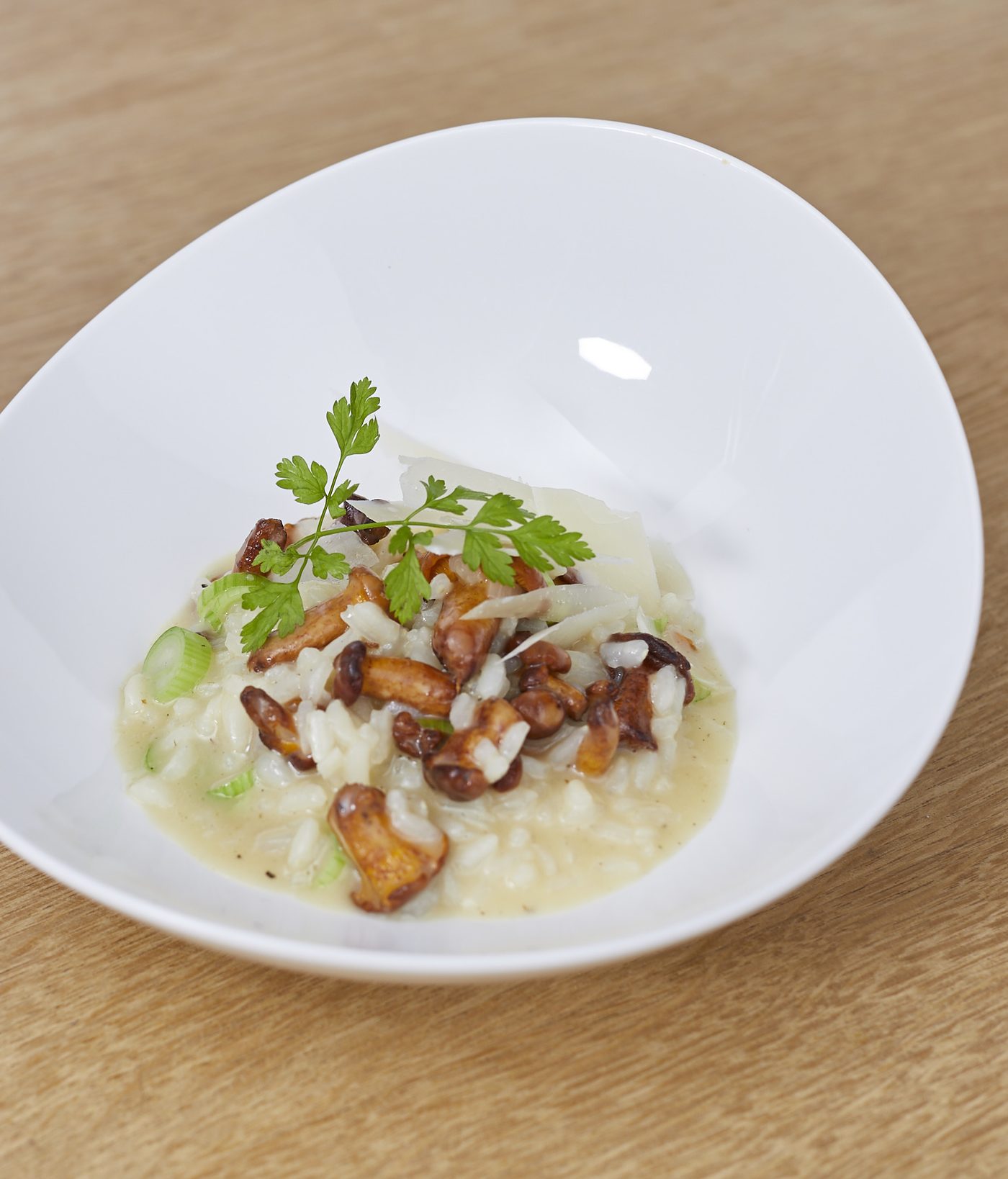
Notice the porcini line: €18.50 of dried mushrooms became €20.56 of cost. That's yield — 10% of them were stems and dust you paid for but can't serve. If you cost with invoice prices instead of yielded prices, every dish on your menu looks more profitable than it is.
At a menu price of €28, this plate runs 32.5% food cost. Solid for a mushroom risotto.
Working backwards: pricing from a target
More useful in practice is the reverse: you know your cost, you know your target percentage, you need a price.
Menu price = cost per serving ÷ target food cost %
€9.10 at a 30% target → €9.10 ÷ 0.30 = €30.33. Round to what your menu and your guests can carry — €29.50 or €31 — but now you're rounding from a number, not a feeling.
Try it in DigitalKnife →Open the web tools · free trial for pro plansWhat a "good" food cost percentage looks like
There is no universal number — there's a range per concept:
- Fine dining: often 30–38%. Higher ingredient quality, but higher prices carry it.
- Casual / bistro: 28–33%.
- Pizza, pasta, bakery: can run 20–25% — cheap base ingredients, technique adds the value.
- Steakhouse: 35–40% is normal. Protein is expensive; volume and beverage make it work.
The percentage also isn't the goal by itself. A dish at 40% food cost that brings €18 of gross profit per plate beats a dish at 22% that brings €6. Watch the euros and the percentage.
Where the calculation goes wrong in real kitchens
- Ignoring yield. The single biggest error. A €30/kg fish at 45% yield costs €66.67 per usable kilo.
- Stale prices. Supplier prices move weekly; a costing from March lies in July.
- Forgetting the small stuff. Oil, butter, seasoning, garnish — the "2% items" that quietly become 5%.
- Costing once, never again. Food cost is a habit, not a project.
Related questions
Does food cost percentage include labor? No. Food cost covers ingredients only. Ingredients plus labor is called prime cost — a separate, equally important number.
What about waste and staff meals? Theoretical food cost (from recipes) won't show them; actual food cost (from purchases vs. sales) will. The gap between the two numbers is where waste, over-portioning, and shrinkage hide.
How often should I recalculate? Re-cost a dish whenever a main ingredient's price moves, and review the whole menu quarterly at minimum.
Is a lower food cost always better? No — guests taste corner-cutting. The goal is a controlled food cost at a price the dish deserves.
Catalin Cucu is a chef and the founder of DigitalKnife — the kitchen toolkit that costs plates, tracks yields, and keeps the math honest.